




Ten years of Planning Club
York Civic Trust (YCT) and the University of York recently celebrated 10 years of its innovative initiative for heritage planning professional development. Planning Club – more formally known as the Heritage Planning Studio – is a unique, award-winning collaboration between the two organisations. Since 2015 it has provided more than 350 postgraduates with real-life experience of the planning process. The students join from a range of the university’s Department of Archaeology’s heritage-related MAs, especially Building Conservation and Cultural Heritage Management.
Working with professional mentors, the Clubbers, as the postgraduates are known, critically appraise live, York-based planning applications. With the training provided, they submit detailed planning recommendations to the City of York Council through YCT in its role as a local planning consultee. This gives the students first-hand experience of planning casework, in critically appraising applications, analysing them in line with national and local planning policy, drawing on professional guidance from the likes of Historic England and the IHBC and drafting and submitting substantive professional comments.
The students also benefit from being able to test and apply conservation theories of the classroom through the dynamics of live planning casework. The mentors provide an added layer of reality in challenging the Clubbers to be objective and to acknowledge that conservation in an English planning context is about managing appropriate change, not preventing it.
York has a wealth of heritage and a corresponding range of designations. It has one of the most complex and varied conservation areas in the UK; it is one of the UK’s five areas of archaeological importance and it has over 1,300 registered buildings and sites, including 71 that are Grade I-listed.
The ‘Planning Club@10’ anniversary event in June helped raise the profile of the initiative, which through its founder, Jane Greville, received the Marsh IHBC Award for Community Contribution in 2018, and an award from the University of York earlier this year. The event was one part CPD, one part reunion; more than 60 Clubbers returned to York, some even from overseas, bolstering an attendance that was more than 100.
Each year Planning Club participants review in detail over 100 applications. In its first 10 years, it has produced over 1,000 written comments. Collectively volunteering up to 10,000 hours each year, the postgraduates provide YCT with an equivalent capacity of five full-time members of conservation-focused staff – the envy of many a local planning authority. The quality and value of the postgraduates’ work quickly convinced YCT to annually employ one of the graduating students as its caseworker. All of the first six YCT caseworkers have moved into fulltime heritage positions across the UK and overseas.
Planning Club graduates can be found across the world – from Harrogate to Hawaii, Scunthorpe to Seoul, Belfast to Bangalore. Eighty-two per cent remain in the heritage or planning industries. They most commonly go on to become conservation officers for local planning authorities or as heritage professionals for private firms. Between 50-100 of those operating in the UK are members of the IHBC.
Originally established to bridge a gap in professional training, Planning Club continues to demonstrate the value of informed, well-supported planning in historic cities. As a model, it can contribute to the longstanding nationwide need for planning expertise, serving the needs of economic regeneration and the national housing shortage. While still unique to York, the success of Planning Club indicates that similar initiatives might benefit other historic cities in the UK.
This article originally appeared in the Institute of Historic Building Conservation’s (IHBC’s) Context 185, published in September 2025. It was written by Duncan Marks of York Civic Trust.
--Institute of Historic Building Conservation
Related articles on Designing Buildings Conservation.
IHBC NewsBlog
IHBC sponsors Gardens Trust event 23-4 Sept 2026
.jpeg)
'Learning from the Past, Shaping the Future’ takes place in Milton Keynes
Renovations to Frank Lloyd Wright's Fallingwater complete
.jpg)
World Heritage Preserved project opens house for tours again
Shakespeare Birthplace Trust places Hall's Croft on HAR Register
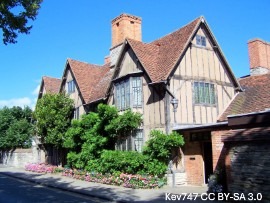
Stratford-upon-Avon home of Shakespeare's daughter is 'At Risk'
Lady Grange’s House repaired on St Kilda
.jpg)
National Trust for Scotland repairs stone cleit with link to famous island resident
Griff Rhys Jones on BBC Radio 4 Today programme
,_Green_Lane,_Derby.jpg)
The Victorian Society’s President unveiled its latest Top Ten Endangered Buildings 2026.
Need a MATE? Book your place now.
IHBC offers free webinars on applying for IHBC accreditation (Full & Associate).
UK Stained Glass Repository finds windows new homes
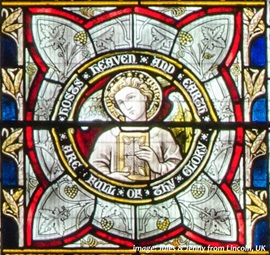
How are stained glass windows are rescued, stored and repurposed?
APPGEBE report sets high aims for quality
'Government must not sacrifice quality in drive to build 1.5m homes'
New measures protect Historic Shipwrecks from heritage crime

Underwater cultural heritage benefits from new HE guidance
How could the City of London skyline look in 6 years' time?

Visualisation shows approved planning applications as completed buildings
National Trust for Scotland calls for VAT cuts
Heritage neglect is encouraged by current policies
IHBC's 'Context' Issue 186 features Industrial Heritage
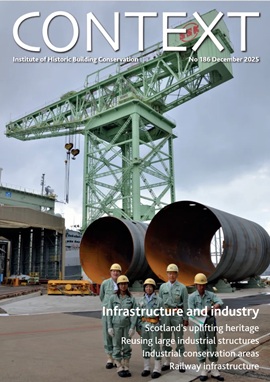
IHBC's members' journal reports on the challenges of conserving infrastructure
Book now for IHBC Annual School 2026
IHBC Annual School is taking place 18-20 June 2026 in Newcastle
RICHeS Research Infrastructure offers ‘Full Access Fund Call’
RICHeS offers a ‘Help’ webinar on 11 March
Latest IHBC Issue of Context features Roofing
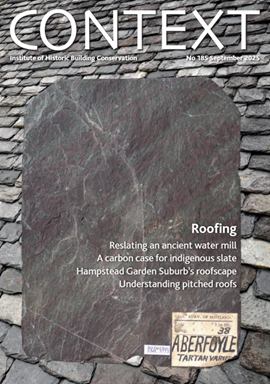
Articles range from slate to pitched roofs, and carbon impact to solar generation to roofscapes
Three reasons not to demolish Edinburgh’s Argyle House

Should 'Edinburgh's ugliest building' be saved?
IHBC’s 2025 Parliamentary Briefing...from Crafts in Crisis to Rubbish Retrofit
IHBC launches research-led ‘5 Commitments to Help Heritage Skills in Conservation’
How RDSAP 10.2 impacts EPC assessments in traditional buildings

Energy performance certificates (EPCs) tell us how energy efficient our buildings are, but the way these certificates are generated has changed.